

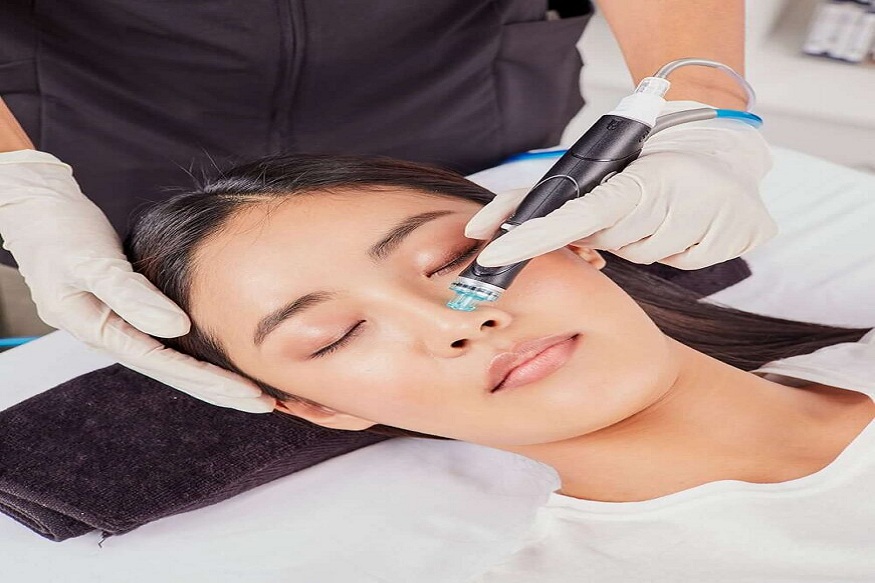
Remember when you thought baby oil and reflective foil were legitimate tanning strategies? Your twenty-something self was an idiot. Now you’re staring at sun damage that’s turned your face into a connect-the-dots puzzle of dark spots. The good news is skin can bounce back with proper help. The bad news is there’s no magic overnight fix despite what Instagram ads promise.
1. Chemical Peels Sound Scary, But Actually Work
The name “chemical peel” makes it sound like someone’s pouring battery acid on your face. Relax. Medical peels are controlled and safe when done properly, though admittedly, you might look a bit rough during the peeling phase.
Light peels using glycolic or lactic acid tackle mild sun damage with barely any downtime. You might look slightly pink for a day. Medium peels go deeper, addressing more serious damage, but you’ll spend about a week looking like you fell asleep on a beach. Deep peels exist for severe damage but require serious recovery time that most people can’t realistically take off work.
Getting a Facial Treatment Indianapolis expert matters enormously here. The wrong strength peel or sloppy application creates new problems instead of fixing old ones. This isn’t the time for your friend’s cousin who took an online course last month.
Multiple gentler sessions typically beat one aggressive treatment. Your face improves gradually without that obvious “I clearly had work done” look that makes everyone ask uncomfortable questions.
2. Retinoids Make Your Skin Act Younger Than It Is
Retinoids are basically bossy vitamin A derivatives that tell your skin cells to quit being lazy. They speed up cell turnover and stimulate collagen production, which sounds great until you hit the adjustment period.
Read More: How Vitamin C for Face Works to Brighten and
Your face will get angry initially. Redness, flaking, general crankiness. This is normal and temporary, not a sign you’re allergic or dying. Most people quit during this phase, thinking it’s not working when actually it’s working exactly right.
Start slow. Use it every third night at first. Work up gradually as your skin stops throwing tantrums. Only use retinoids at night because sunlight destroys them and makes you more sensitive to UV damage, which would be spectacularly counterproductive given what you’re trying to fix.
Patience is crucial. This takes months, not days. If you’re expecting dramatic results by next Tuesday, you’ll be disappointed and quit before anything actually happens.
3. Lasers Target Problems With Surprising Precision
Modern laser technology can zap specific issues with impressive accuracy. Different lasers fix different problems. Some break up pigmentation. Others stimulate collagen. Some resurface texture.
IPL (which isn’t technically laser but works similarly) targets brown spots and redness. Fractional lasers create controlled damage that stimulates healing and collagen. Ablative lasers remove outer skin layers but require significant recovery, where you look like you got in a fight with a belt sander.
This isn’t one treatment and done. You’ll need multiple sessions spaced weeks apart. Costs pile up quickly, but results often exceed what creams achieve alone, no matter how expensive those creams were.
Read More: Looking After Your Mind Is Part of Looking After Your
After treatment, your skin is vulnerable and irritated. Religious sun protection, gentle products, and resisting the urge to pick at healing skin prevent complications and protects what you just paid for.
4. Vitamin C Serums Help, But Won’t Work Miracles
Vitamin C brightens skin and fades spots gradually. It also provides antioxidant protection against ongoing damage. Will it erase decades of sun abuse alone? Absolutely not. Does it help as part of a comprehensive approach? Yes.
Quality matters tremendously here. Vitamin C is finicky and degrades fast, especially in clear bottles. Look for L-ascorbic acid at 10-20% concentration in opaque packaging, or you’re basically buying expensive spoiled orange juice for your face.
Apply it mornings under sunscreen. The two work together, providing better protection than either alone while addressing existing damage.
5. Microneedling Tricks Your Skin Into Healing Itself
Microneedling involves rolling tiny needles across your face, creating controlled injury. Yes, it sounds medieval. Yes, it works. The damage triggers healing responses including collagen production.
Professional microneedling goes deeper than those cheap rollers you can buy online, producing actual results instead of just irritation. You’ll need multiple sessions about a month apart. Expect several days of looking sunburned after each treatment.
Combining microneedling with serums enhances results since the tiny channels improve absorption. Just don’t try this at home with questionable equipment from Amazon. Leave it to professionals who sterilize their equipment and know what they’re doing.
6. Sun Protection Or Everything Else Is Pointless
None of this matters if you keep frying your skin daily. Broad spectrum SPF 30 minimum every single day. Cloudy? Still wear it. Winter? Definitely wear it. Sitting by a window? You guessed it.
Reapply every two hours outdoors. Use enough product. Most people slap on about a quarter of what’s needed for actual protection, then wonder why they still burn.
Wide-brimmed hats help. Sunglasses protect the delicate eye area. Seeking shade during peak hours makes sense. This isn’t about becoming a vampire who never goes outside. It’s about not being stupid when you do.
Conclusion
Reversing sun damage takes combining approaches for real improvement. Chemical peels, prescription retinoids, laser treatments, vitamin C, microneedling, religious sun protection, and supporting ingredients all contribute. Nothing erases decades of damage instantly. Consistent effort over months produces visible results that make you look less like you spent your twenties actively trying to age yourself.
Work with qualified professionals who know what they’re doing, be patient because this takes time, and start wearing sunscreen now.